Address
304 North Cardinal
St. Dorchester Center, MA 02124
Work Hours
Monday to Friday: 7AM - 7PM
Weekend: 10AM - 5PM
Precision cold-rolled stainless steel strip, coil and belt solutions
Address
304 North Cardinal
St. Dorchester Center, MA 02124
Work Hours
Monday to Friday: 7AM - 7PM
Weekend: 10AM - 5PM

How to compare cold-worked and precipitation-hardening high strength stainless strip without specifying more strength than the component can actually form.

A high strength stainless strip programme begins with a mechanical target and a manufacturing route, not with the highest number on a data sheet. Strength must be balanced against ductility, springback, fatigue and the ability to form a crack-free part.
Cold-worked austenitic grades, such as 301, gain strength through rolling reduction and tempering. Precipitation-hardening grades use alloy chemistry and a controlled heat-treatment cycle to develop different property combinations.
The choice affects more than tensile strength. It changes magnetic response, corrosion resistance, heat-treatment control, scrap strategy and the questions that must be answered before a production trial.
| Route | Strength mechanism | Best starting point |
|---|---|---|
| 301 cold worked | Work hardening and temper | Springs, contacts and formed strip |
| 301L | Lower-carbon 301 family | Welded or sensitisation-sensitive parts |
| 17-7PH | Precipitation hardening | Applications needing a specified heat-treatment route |
| Custom 465 family | Martensitic age hardening | Extremely high strength with corrosion resistance |
Start with load, deflection, allowable permanent set and expected cycles. Then add the forming method, bend radius, grain direction, welding or heat treatment and service environment.
A request for high strength stainless strip becomes actionable when the buyer also provides the maximum acceptable springback and the minimum elongation that still allows the tool to run. Without those limits, the supplier can only quote a grade rather than solve the material problem.
Increasing cold work can improve strength but does not guarantee better corrosion performance. Surface finish, chloride exposure, temperature and cleaning chemistry still determine whether a grade is suitable.
For high-strength components exposed to moisture or process chemicals, compare the complete material state with the environmental requirement. A stronger grade that pits or cracks in service is not an improvement.
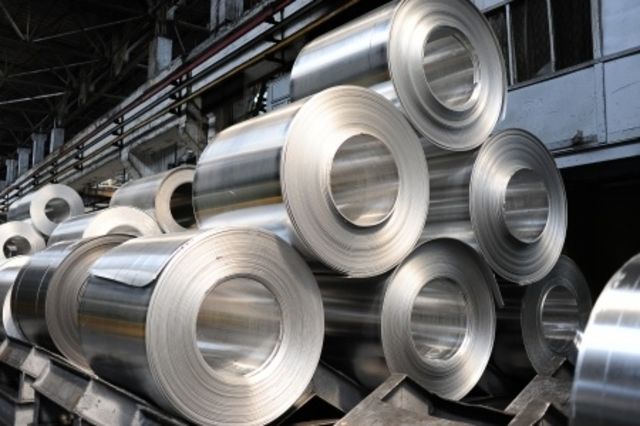
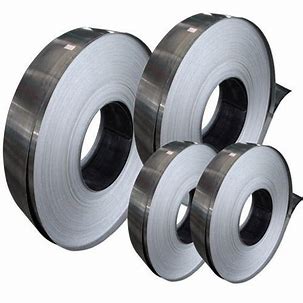
HIQ supplies precision cold-rolled 200, 300 and 400-series stainless strip with custom thickness, width, temper, surface and edge requirements. The production route includes rolling, annealing, tempering, levelling and slitting under one technical process.
For an overseas buyer, that integration can simplify the quality conversation: dimensional control, mechanical condition and packing can be reviewed against the same purchase specification. It also allows custom slitting and export packing to be planned with the material order.
First agree the grade and property range. Then produce a sample strip in the proposed temper and edge condition. Next, form and test the real component rather than only a flat tensile coupon.
Only after the first article passes should the buyer lock the inspection method, packaging and change-control requirements. This sequence is slower than choosing the hardest available condition, but it reduces the risk of a full production lot failing at the press or in fatigue.
Strength depends on composition and processing. Precipitation-hardening and martensitic grades can exceed common cold-worked grades, but they require application-specific heat treatment and property validation.
HIQ reviews 301 and 301L requirements by thickness, width, temper, forming route and volume. Final mechanical limits are confirmed against the drawing and order specification.
No. Yield strength, elongation, hardness, direction and test method also influence forming and spring performance.
Before you approve high strength stainless strip, send the drawing, grade or application, target thickness and width, temper, surface, edge requirement, operating environment and estimated annual volume. Our Shanghai and Danyang teams will review the manufacturing route and identify the details that should be tested before production.
Related HIQ resources: 301 high-strength strip · 301L controlled-carbon strip · Carpenter high-strength stainless guide
