Address
304 North Cardinal
St. Dorchester Center, MA 02124
Work Hours
Monday to Friday: 7AM - 7PM
Weekend: 10AM - 5PM
Precision cold-rolled stainless steel strip, coil and belt solutions
Address
304 North Cardinal
St. Dorchester Center, MA 02124
Work Hours
Monday to Friday: 7AM - 7PM
Weekend: 10AM - 5PM

Custom stainless steel strip specification
A useful strip specification connects the finished part to the rolling, annealing, tempering, slitting and packing route. Here is the information our team needs to quote and review a custom requirement.
A useful custom stainless steel strip specification starts with what the strip becomes and which conditions limit service life. A spring, battery tab, seal band and decorative trim each prioritise a different combination of strength, elasticity, formability, corrosion resistance, flatness and surface quality. General terms such as “high quality” are difficult to manufacture consistently; measurable requirements are easier to quote and inspect.
Include the component drawing or a sample photo, the forming method, expected annual volume and any known failure mode. If the part is replacing an existing material, provide the current grade, temper and supplier data when available.
The 304 vs 316L stainless steel strip guide covers one common decision. High-strength 301 stainless steel strip, low-carbon 304L, corrosion-resistant 316L, heat-resistant 310 and ferritic 430 can all be appropriate depending on the duty.
State the corrosive medium, concentration, operating temperature, cleaning routine and whether the part is welded. Where the risk is high, validate the candidate grade in the real environment before volume approval.
For additional material definitions, review the World Stainless Association technical resources. However, confirm the selected custom stainless steel strip against your actual process and service requirements.


Nominal thickness alone does not describe a usable precision strip. Define the thickness range, measurement method, frequency and critical locations. Consider whether thickness variability or flatness is more important to your press, winding system or coating process.
Use the finished-part tolerance to guide the strip request. An unnecessarily tight gauge can add processing cost without improving the part; a loose specification can create avoidable assembly variation. HIQ discusses tolerance with the manufacturing route because rolling, annealing, levelling and slitting interact.
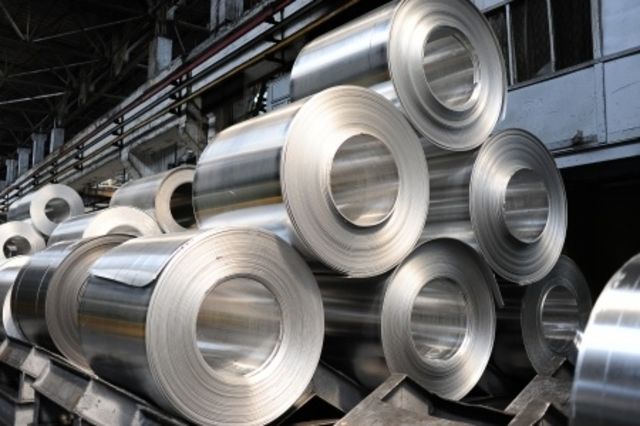
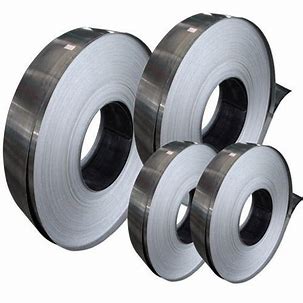
Specify the slit width, width tolerance, burr direction, edge condition, inner diameter, outer diameter, coil mass and interleaving or packing needs. A strip that meets the dimensional drawing but cannot be handled safely or fed consistently is not a complete production specification.
Our precision slitting capabilities can convert master coil into narrower strip. Share the machine width, line speed, tension control and expected coil-change frequency if these can influence handling.
Soft, quarter-hard, half-hard, hard and super-hard conditions can produce very different balance between strength and remaining formability. Specify tensile strength, yield strength, elongation, hardness or spring properties only where they help predict the finished part. Use recognised test methods and acceptance limits so supplier and customer interpret the result consistently.
Surface requirements may include 2B, BA, polished or a project-specific appearance. For medical, electronics, coating and sealing applications, cleanliness, oil level, scratches, pits and edge defects can be as important as roughness. State the inspection condition and whether a limit sample is required.
Export packing should protect edges, prevent coil collapse and support safe lifting and storage. Define document requirements such as mill certificate, test report, packing list and traceability information. Also confirm whether the coil needs moisture protection, rust prevention or easy line-side opening.
When a new part is critical, agree a trial quantity and an evaluation plan. Confirm that the strip feeds, forms, springs, welds, seals or coats as intended. A production specification should be shared by commercial, engineering and quality teams before the first volume order.
Send grade or application, thickness, width, temper, surface, edge, tolerance, coil size, annual volume and delivery location. Our team can review the requirement against manufacturing capability and respond with the questions that will make the quotation more accurate.
Send your specification