Address
304 North Cardinal
St. Dorchester Center, MA 02124
Work Hours
Monday to Friday: 7AM - 7PM
Weekend: 10AM - 5PM
Precision cold-rolled stainless steel strip, coil and belt solutions
Address
304 North Cardinal
St. Dorchester Center, MA 02124
Work Hours
Monday to Friday: 7AM - 7PM
Weekend: 10AM - 5PM

A buyer and process-engineer guide to traverse-wound stainless steel strip packages.
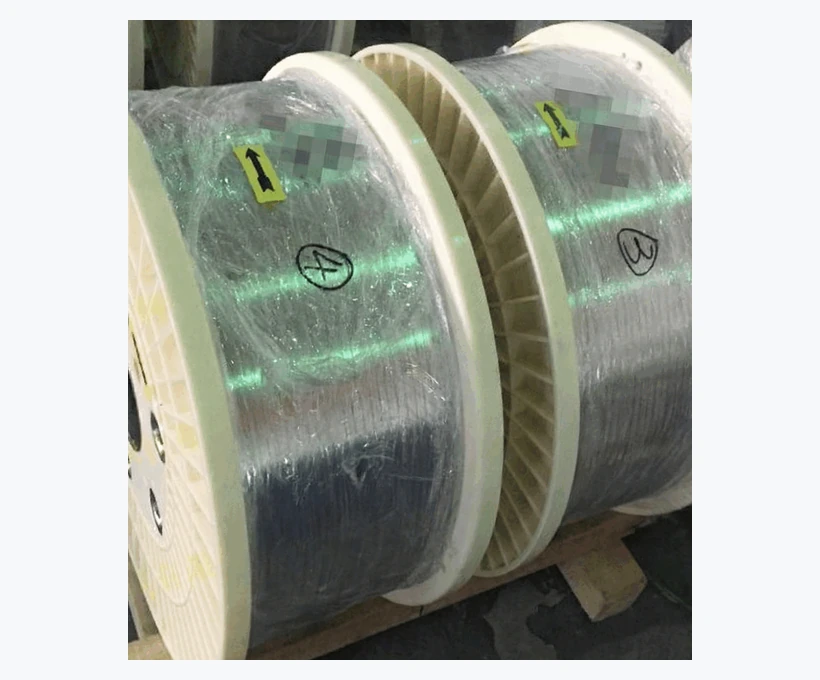
An oscillated wound stainless strip package can extend uninterrupted production, reduce spool handling and make narrow strip easier to present to a feed system. It can also create new problems if width, edge quality, layer placement and payoff geometry are not specified together.
Oscillated winding is best treated as a system: strip condition, traverse pattern, package dimensions and the customer’s dereeler all have to work as one.
A conventional narrow spool carries many small layers across a limited face width. Oscillated winding traverses the strip side-to-side as it builds, creating a wider package with controlled layer overlap. The result can hold much more length and present a more stable pay-off path.
The package is not simply a larger spool. Cross-over points, layer registration and edge support affect whether the strip pulls freely. A poor package can pinch an edge, nest into the previous layer or create tension spikes even when the strip dimensions are correct.
| Format | Strength | Watch closely |
|---|---|---|
| Oscillated or traverse wound | Long run length and compact package with a controlled traverse pattern. | Layer placement, cross-over quality, package width and payoff tension. |
| Plastic spool | Defined support, easy handling and repeatable dereeler interface. | Spool dimensions, flange clearance, package mass and edge protection. |
| Paper core | Conventional handling and straightforward core mounting. | Core strength, winding tension and edge alignment. |
| Coreless coil | Compact, low-disposal package. | Telescoping risk, inside diameter and support during transport. |
Longer package length reduces changeover frequency and can lower the proportion of material lost at threading. Stable payoff is valuable for fine connectors, medical strip, filter components, springs and continuous stamping.
For thin or narrow strip, a well-controlled traverse package can also reduce handling of individual small spools. That reduces the chance of crushing an edge, dirt pickup and packaging waste.
State the equipment interface first. Provide the maximum package width, outside diameter, mass and inside diameter accepted by the dereeler. Then add the strip orientation, required run direction and how pay-off tension is controlled.
Define strip width, thickness, grade, temper and edge geometry. For very thin strip, a clean deburred or round edge often helps layer release, but the decision should consider downstream contact geometry.
| Defect | Why it matters | Check |
|---|---|---|
| Layer nesting | Strip falls into the previous layer and resists pay-off. | Inspect cross-over pattern under tension at several package diameters. |
| Edge pile-up | Multiple edges align and concentrate pressure. | Check traverse timing and width relative to package face. |
| Telescoping | Layers shift axially during handling or unwinding. | Measure face stability after packing and transport simulation. |
| Burr interlock | Opposing burr faces lock together and create tension spikes. | Classify burr side and run a continuous pay-off trial. |
| Surface marking | Layer contact damages a visible or coated surface. | Use protected surfaces or interleaving where appropriate. |
A burr can act like a small hook. Under the pressure of multiple layers, it can catch an adjacent surface or trap a sliver. That creates a tension impulse as the strip leaves the package. In a steady mechanical process, an operator may see erratic feed, loop variation and missed index positions.
A controlled square edge is not universally wrong. Some forming tools need a defined shoulder. The requirement is consistency: burr side should be known, loose slivers should be controlled and the package should be built in a way that accommodates the actual edge geometry.
An oscillated wound stainless strip can make a narrow-strip process more productive by extending run length and improving the presentation of material. It works when package engineering, edge quality and dereeler design are reviewed together. Ask for a pay-off trial with the proposed package and edge, not just a dimensional certificate. The oscillated wound stainless strip should be approved as a complete handling system, including the transition at the inside and outside ends of the package.
Compare oscillated wound 316L stainless strip with coreless wound 201 stainless strip and round edge 316L stainless strip. The edge finishing guide explains how radius and burr direction influence the package.
For material and test terminology, refer to World Stainless and the applicable ASTM International standard.
