Address
304 North Cardinal
St. Dorchester Center, MA 02124
Work Hours
Monday to Friday: 7AM - 7PM
Weekend: 10AM - 5PM
Precision cold-rolled stainless steel strip, coil and belt solutions
Address
304 North Cardinal
St. Dorchester Center, MA 02124
Work Hours
Monday to Friday: 7AM - 7PM
Weekend: 10AM - 5PM

How to specify ultra-thin stainless strip beyond nominal gauge, including measurement method, flatness, edge burr, coil format and trial acceptance.

Ultra thin stainless strip needs a specification that controls how gauge, flatness and edge quality are measured, not only the number printed after the nominal thickness. At very low thickness, a small absolute variation can be a large share of the section.
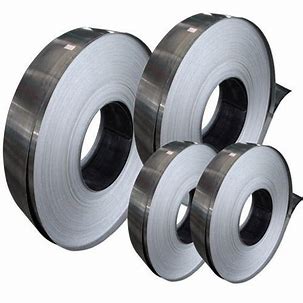
State the nominal gauge, tolerance range and measurement instrument. A micrometer and an inline gauge may not report the same value in the same way, especially near a slit edge or during coil movement.
Clarify whether thickness is measured at strip centre, across a defined band, or at prescribed positions through the coil. Also define sample frequency and how disputes will be resolved.
Thin strip can satisfy a gauge check yet still fail to feed because of crossbow, twist or camber. The effect grows when width is narrow and the unsupported span is long.
A burr that looks minor on a heavy strip can become a large percentage of a thin section. It may scratch adjacent wraps, create a fatigue initiation site or interfere with fine stamping.
Specify burr height, direction and edge profile where relevant. Use a photograph and a measurement method so the accept/reject boundary is clear.
HIQ operates ultra-thin precision strip production with a 20-high mill, controlled annealing, tempering, tension levelling and precision slitting. The process can be reviewed from rolling through final coil preparation rather than split across unrelated vendors.
For export customers, the Shanghai sales team can coordinate width, coil weight, interleaving, edge protection and pallet format with the production route. That combination helps protect thin strip during long-distance handling.
Use a short trial to check de-coiling, tension control, camber response, stamping or etching. Measure first-article parts at the head, middle and tail of the coil.
Once the route is stable, freeze the measurement plan and change-control requirements. Ultra-thin strip performs best when the supplier and customer use the same definition of gauge, flatness and edge quality.


The boundary varies by industry and width. HIQ’s precision strip range extends to 0.02 mm; the right specification depends on width, temper and downstream handling.
No. It should reflect the machine and finished part. Excessively tight limits can add cost without solving a flatness or edge issue.
Yes, precision slitting can produce narrow widths, but edge condition and handling must be agreed together.
Before you approve ultra thin stainless strip, send the drawing, grade or application, target thickness and width, temper, surface, edge requirement, operating environment and estimated annual volume. Our Shanghai and Danyang teams will review the manufacturing route and identify the details that should be tested before production.
Related HIQ resources: 201 precision stainless coil · Custom strip specification · ASTM international standards
