Address
304 North Cardinal
St. Dorchester Center, MA 02124
Work Hours
Monday to Friday: 7AM - 7PM
Weekend: 10AM - 5PM
Precision cold-rolled stainless steel strip, coil and belt solutions
Address
304 North Cardinal
St. Dorchester Center, MA 02124
Work Hours
Monday to Friday: 7AM - 7PM
Weekend: 10AM - 5PM

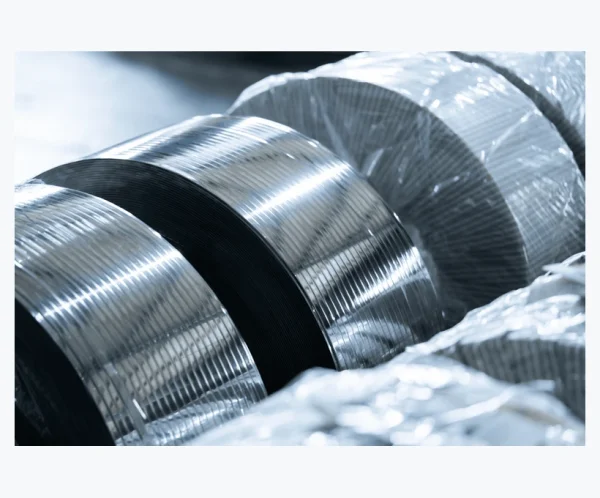
Ferritic 430 stainless strip with single- or double-side chamfer options, custom slit width and clean BA surfaces.
Need a specific grade, temper or slit width? Send the drawing, target tolerance and estimated annual volume. Our team will review the requirement with manufacturing.
Request a technical quoteChamfered 430 Stainless Steel Strip is supplied for projects where one dimensional value is not enough: the finished edge must also feed, form, weld, seal or wear predictably. This chamfered 430 stainless strip option combines a reviewed material condition, custom slit width, edge treatment and a winding format matched to the production handle.
HIQ Material coordinates the specification around the finished component, not just the master coil. Share the grade, temper, thickness, finished width, burr direction, edge drawing, coil mass, inside diameter and the first operation on your line. The quotation can then define measurable acceptance points instead of relying on a general “clean edge” description.
The edge is a functional surface. A burr that looks minor on a sample can scratch a coating, jam a guide, puncture a seal or concentrate stress during bending. At the same time, removing too much material can change contact geometry or reduce available section. The right specification balances those effects with the material and the way the strip is handled.
| Material | 430 ferritic stainless steel |
|---|---|
| Thickness | 0.15-3.00 mm for chamfering review |
| Finished width | Typically from 3 mm, determined by chamfer geometry and winding stability |
| Width tolerance | Slit-width tolerance commonly +/-0.05 mm; chamfer dimension by drawing |
| Edge | Single-side or double-side chamfer with edge orientation recorded |
| Winding | Coreless, paper core or spool; suitable interleaving supplied on request |
| Surface | BA, 2B or a reviewed decorative finish |
These are planning ranges, not an automatic release limit. Final feasibility is confirmed against the actual material condition, master-coil width, finished width, edge geometry, coil build and inspection plan. Very thin strip or very narrow width can magnify burr, camber and edge-wave effects, so a sample review is recommended before a production order.
The chamfered 430 stainless strip is normally specified where repeatable material feed and a controlled edge influence part quality. Typical review cases include:
Inspection should match the failure mode. For a sharp-edge risk, measure burr height and record which face carries the burr. For a radius or chamfer, check profile and orientation rather than width alone. For automated feed, inspect edge wave, crossbow, layer alignment and the position of the strip in the pack. Surface appearance may require protection film or interleaving even when dimensional results are correct.
An effective inspection plan can include incoming material review, slit-width measurement, visual edge classification, burr-height sampling, flatness checks and packaging verification. If the component is welded, formed, coated or heat treated, include a short downstream trial in the approval. This connects the coil specification to the process condition that actually matters.
Related specifications and technical guidance: 430 BA Stainless Steel Strip · 430 Custom Slit Coil · Steel Strip Edge Finishing Guide.
For an edge or metallurgical check, use the relevant ASTM International or ISO standard named in your drawing. Do not use a generic catalogue limit as a substitute for the product standard.
Yes, a trial section or short coil can be reviewed when material and processing setup are available. Approve the edge direction, burr limit, width method and winding format before scaling to production.
A deburred or round edge often reduces snagging, but the best choice depends on guide material, strip thickness, tension and the way the strip enters the tool. A square edge may remain necessary for contact geometry.
Yes. The edge allowance, finished width and winding stability are reviewed together. Tightening one tolerance can change the practical minimum width or the suitable package format.
Choose paper core, plastic spool or coreless winding after considering the dereeler, coil mass, available floor space, shipping method and risk of edge damage. Protective film or rust-inhibiting paper can be added when the application requires it.