Address
304 North Cardinal
St. Dorchester Center, MA 02124
Work Hours
Monday to Friday: 7AM - 7PM
Weekend: 10AM - 5PM
Precision cold-rolled stainless steel strip, coil and belt solutions
Address
304 North Cardinal
St. Dorchester Center, MA 02124
Work Hours
Monday to Friday: 7AM - 7PM
Weekend: 10AM - 5PM

A practical guide to 301 stainless steel strip temper selection, including the trade-off between strength, springback and remaining formability.

A 301 stainless steel strip temper chart is useful only when it is read alongside the forming route and finished-part requirement. Two strips with the same grade can behave very differently after cold rolling and tempering.
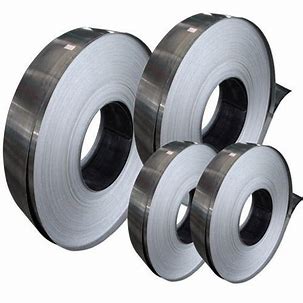
Temper describes the amount of controlled cold work left in the strip. As strength increases, the allowance for bending or drawing usually falls. The practical question is therefore not simply which condition is hardest, but how much forming remains after the material reaches the required spring response.
A spring that is coiled after hardening may need a different starting condition from a part stamped in the soft state and hardened later. Customers should state the blank size, bend radius, grain direction and expected deflection so the strip supplier can review the route rather than quote from a hardness number alone.
Mechanical targets vary with thickness, chemistry and the agreed test method. Use a supplier datasheet and the approved standard for acceptance values; do not assume that an unqualified table applies to every 301 coil.
| Condition | Working characteristic | Typical selection question |
|---|---|---|
| Annealed | High elongation and easy forming | Will the part receive strength through later cold work? |
| Quarter-hard | Moderate spring with residual formability | Can the bend radius tolerate the added strength? |
| Half-hard | Higher strength and useful spring response | Is the forming operation gentle enough? |
| Full hard | High tensile strength and strong springback | Can the tool compensate for reduced ductility? |
| Extra/super-hard | Maximum strength family | Has trial production confirmed crack-free forming? |
Start with the load and deflection of the finished spring. Then describe the manufacturing sequence: slit, stamp, etch, form, heat treat, coat or assemble. Add the failure mode you want to avoid, such as permanent set, fatigue cracking, edge burr or magnetic response.
The final specification can include tensile strength, yield strength, hardness and elongation in addition to temper. Where agreed, test direction and sample location should also be defined. This makes the acceptance criteria clearer than a loose request for “high hardness.”

No. Higher strength can improve load capacity, but excessive cold work may leave too little ductility for the forming route. Select the lowest practical strength that satisfies the spring requirement.
Yes. Width, edge quality and burr direction should be agreed together because they affect feeding as well as the finished part.
No. A chart narrows the range; trial forming and spring testing confirm the final condition.
Send the drawing, grade or application, target thickness and width, temper, surface, edge requirement, operating environment and estimated annual volume. Our team can review the manufacturing route and confirm which details should be tested before production.
Related HIQ resources: 301 precision strip · Custom stainless steel strip specification · Request a technical quote · World Stainless Association technical resources
